News - 01 Jul 2026
Conductor Umberto Clerici shares his concert insights
Ahead of the DSO's upcoming concert, conductor Umberto Clerici explains what makes Beethoven's 'Triple Concerto' so refreshingly unique and why Brahms's 'Second Symphony' continues to invite different interpretations with every performance.

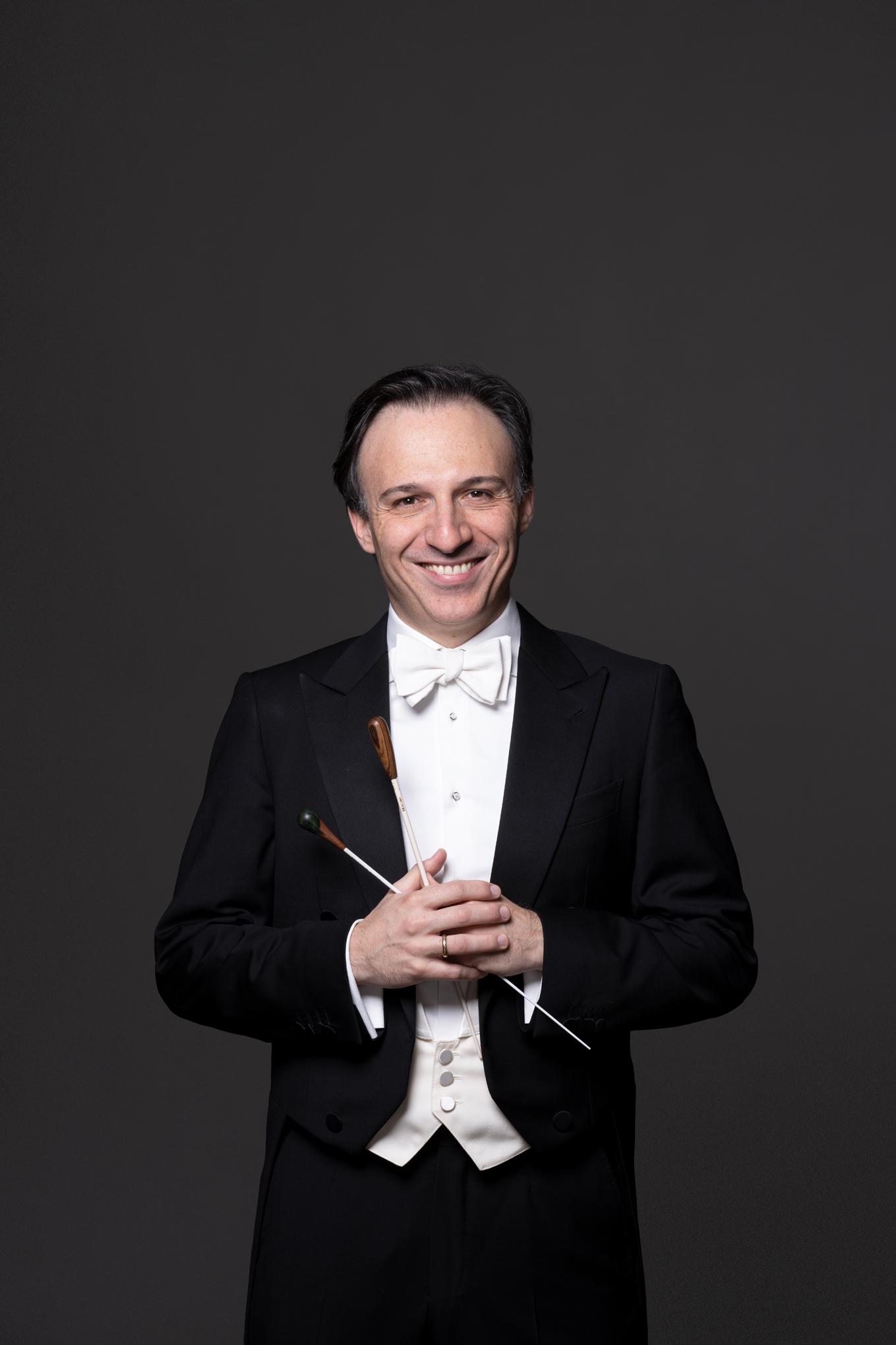
Beethoven's Triple Concerto is quite unique. What makes it such a compelling work to conduct?
I'm especially looking forward to conducting Beethoven's Triple Concerto because it is a work I have performed many times, both with the Trio di Torino—my piano trio in Italy for more than a decade before I moved to New Zealand—and as a soloist.
It is a very unusual piece. There are only a handful of triple concertos in the repertoire, and Beethoven's is by far the most famous. Unlike many of his works, which explore profound philosophical ideas and universal themes, this concerto has a wonderfully light-hearted character. It is full of memorable melodies, rhythmic energy and an infectious sense of joy.
One of the fascinating aspects of the work is that it was originally conceived as a cello concerto before Beethoven expanded it to include the violin and piano. That's why, in each movement, the cello introduces the main themes first. As a cellist myself, I have always found that rather flattering!
You're working with three soloists performing as an ensemble. How does that shape your approach compared with a traditional concerto?
Having three soloists certainly makes the performance more complex, but it also makes it more exciting. Rather than working with one soloist, you're balancing three individual voices while ensuring they perform as a unified ensemble.
Fortunately, the soloists know each other exceptionally well. Their shared musical understanding allows them to present a cohesive interpretation of the work, which gives me the opportunity to shape the orchestral accompaniment around them—to create, if you like, a musical suit tailored specifically for their performance.
This concert is also special because it celebrates the Dunedin Symphony Orchestra's 60th anniversary. Over the past 15 years, I've had the pleasure of performing with and conducting the DSO on many occasions, and both Tessa Petersen and Heleen du Plessis have long been integral members of the orchestra as Concertmaster and Principal Cello, respectively. In many ways, this performance feels like a celebration within a celebration.
Brahms's Second Symphony is often described as warm and optimistic. How do you bring that character to life?
Brahms struggled enormously before completing his First Symphony, largely because he felt the immense weight of Beethoven's legacy. He spent 21 years working towards that first symphony, worried that he could never measure up.
His Second Symphony could hardly be more different. It was completed just a year later and seems to flow with remarkable ease. It remains one of my favourite symphonies.
Most musicians—and audiences—experience it as serene, pastoral and full of warmth. Brahms composed it during the summer of 1877 while staying in the beautiful Austrian countryside near Lake Wörth. To me, you can almost hear the sunshine, the peaceful landscape and the relaxed atmosphere throughout the music.
Yet Brahms himself described it very differently. Writing to his publisher, he famously said:
"It is so melancholy that you will not be able to bear it. I have never written anything so sad, and the score must come out in mourning."
That contrast is one of the things I find so fascinating about music. The same work can evoke completely different emotions depending on who's listening, who's performing and even where we are in our own lives. A composer may hear one thing, performers another, and audiences something entirely different—and none of those interpretations are necessarily wrong.
That is one of music's greatest strengths. It invites us all to bring our own experiences to what we hear, making every performance a unique journey for both the musicians and the audience.
I'm very much looking forward to sharing that journey with everyone at this concert.
Share article:
Other News & Reviews




Stay Tuned.
Keep current about all things DSO.


2026 Dunedin Symphony Orchestra
(Registered as Dunedin Civic Orchestra Incorporated. Registered Charity CC34031.
Address
PO Box 5571
Dunedin 9054
New Zealand
Hanover Hall
65 Hanover Street
Dunedin 9016
New Zealand








Address
PO Box 5571
Dunedin 9054
New Zealand
Hanover Hall
65 Hanover Street
Dunedin 9016
New Zealand
Connect


2026 Dunedin Symphony Orchestra
(Registered as Dunedin Civic Orchestra Incorporated. Registered Charity CC34031.