News - 30 Jul 2026
Music lecturers take to the stage determined to have a great time
As the University of Otago School of Music’s centenary is celebrated with a Dunedin Symphony Orchestra performance featuring music lecturers Tessa Petersen, Heleen du Plessis and Terence Dennis, Rebecca Fox of the ODT talks to the soloists about Beethoven and restructures. Thursday, July 30, 2026 Photo credit: ODT - Linda Robertson

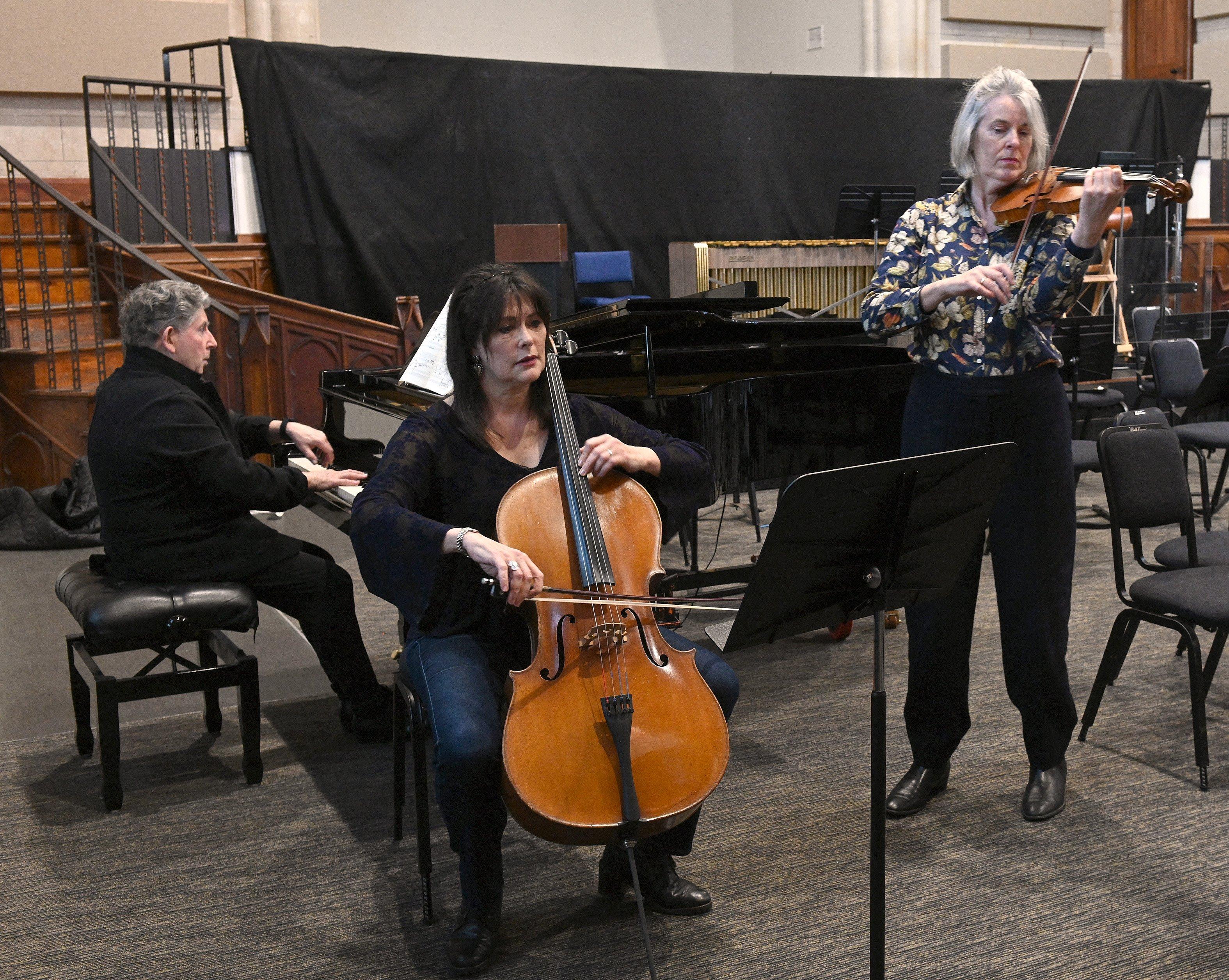
As three of the University of Otago’s most senior performance academics step on stage this weekend, it will be a celebration of skill, endurance and history.
Violinist Tessa Petersen, cellist Heleen du Plessis and pianist Terence Dennis, who have more than a century of experience between them, will perform Beethoven’s Triple Concerto with the Dunedin Symphony Orchestra at the Dunedin Town Hall.
“It’s very special,’’ du Plessis says.
As they prepared to begin rehearsals for this major work, which aims to celebrate 100 years of the university’s music school, news broke of the tertiary institution’s planned restructure of its music performance department.
While it will not personally affect the trio, as each has signed an agreement allowing them to continue in their roles until they retire, it could mean a concert of this stature featuring performance academics from the University of Otago is unlikely to happen again.
It is proposed the traditional lecturer-to-professor academic pathway for future classical music performance staff comes to an end, which means the end to du Plessis’ associate professor role, Petersen’s senior lecturer role and Dennis’ professor role when they retire. Instead, the roles will be replaced by teaching fellows. It also impacts their colleague, senior voice lecturer Dr Tessa Romano.
So it makes the concert a bittersweet performance for the trio who have worked together for more than 16 years. When du Plessis joined the faculty, they formed TriOtago in 2010, performing chamber music sporadically for many years.
“Now that it seems like our positions will be coming to an end, that makes it even more significant that we have this opportunity,” du Plessis says.
Alongside their academic positions, du Plessis and Petersen also have roles as the principal cellist and concertmaster, respectively, in the Dunedin Symphony Orchestra (DSO), which is celebrating its 60th anniversary this year.
“This symbiotic synergy between the orchestra and the music department is basically totally unique,” she says.
As it is not a full-time orchestra, the DSO relies on the performance academics and students at the university for its musicians. Often the cello and violin sections are mostly made up of du Plessis and Petersen’s students.
“Traditionally, those positions have been attracting internationally experienced people. That makes a huge difference to the orchestra.”
It was that ability that attracted du Plessis to Dunedin when she came from South Africa more than 16 years ago.
“Music education doesn’t happen only in the classroom — it happens through concert orchestras, chamber music festivals, competitions, community ensembles and collaborations, to create an ecosystem where young musicians can grow into confident performers and the whole community benefits. Now they want to have all those benefits but not give the person who provides that any opportunities.”
However, when the academics step on stage they will put these concerns aside and enjoy the moment.
“When you play with other people, you take on their skill, their knowledge, their experience, their identity, their being, their soul. We expose our souls to each other,” du Plessis says.
“It’s a level of communication that you cannot explain to anyone.”
The piece was originally written for cello and later on the pieces for violin and piano were added.
For a cellist, she believes the piece is one of the most difficult concertos in the cello repertoire, requiring du Plessis to to work on strength and endurance in preparation.
“It’s genuinely really hard. It’s very virtuosic. It’s very fast. It’s athletic, it’s gymnastic.”
It demands applying her mind and muscles to create the endurance and mindset to play.
“But it is incredibly rewarding. Sometimes you practise very hard at a piece and you’re very good at it but it doesn’t sound impressive. But this sounds amazing. It sounds very joyful and impressive and exhilarating.”
The second movement is her favourite as it requires a slower mindset which she thrives on.
“It’s the most amazing melodies.”
As she combines performing with teaching, researching and writing, the last time she performed a solo was 2019.
“So it is very scary. It’s a combination of the excitement of having a challenge and because it extends yourself.’’
Petersen is also looking forward to the challenge, where each instrument has its time to shine as well as play together.
“I want to have that sort of sparkle that a violin can have within the texture of the three of the soloists playing together.
“It’s a great piece of music. We’re determined to have a great time.”
For Petersen, the DSO was the first orchestra she heard as a child, and inspired her to become a musician. So when she returned to Dunedin with her family from America nearly 20 years ago, fortuitously a teaching position at the university soon came up along with a position on the DSO.
“The difficulty with positions is, to attract someone from overseas you need a substantial job there to bring someone all the way to Dunedin, unless they happen to just love living here, which is like me.”
Petersen, who is now DSO’s concertmaster, is concerned about the future of violin teaching in Otago as a result of the proposal. She has made a personal decision to retire early in two years’ time when she reaches 20 years of service.
“It was a big decision to make. Of course, I will continue with the orchestra as long as I’m able. So I’m concerned about the ecology of the violin situation, the teaching situation when I leave.’’
Her students go on to feed into Saturday morning music classes, inspiring the next generation of players as well as orchestras around the country.
Dennis is considered one of the country’s top pianists and accompanist, renowned for his long-term recital partnership with soprano Dame Kiri Te Kanawa and her foundation, and is one of the longest serving humanities staff members having joined in 1981.
The timing of the announcement was “unfortunate”, especially given the centenary year and that music was in the original deed of the university, he says.
His title of Blair Professor was created after a charitable trust was created by the will of Dunedin seed merchant John Blair in 1913. It instructed trustees to pay a sum towards the salary of a lecturer in music at the University of Otago. It now goes to the longest serving professor in the music department but is a title only.
“He was keen to support music.’’
Dennis, who first came to the university as as student in 1974, has decided to phase retirement through to 2029.
“It’s been an excellent base. It’s been an honour to serve, but it’s also allowed me the freedom to pursue performing internationally and nationally.’’
The Beethoven piece is one he has performed before with former university staff members violinist Prof Kevin Lefohn and cellist Scott Terzaghi.
“I’m looking forward to playing it again. I think it’s a lovely blend of the three instruments.’’
The piano part was written by Beethoven for Archduke Rudolf from the Austrian imperial family, a favoured pupil of his. As it was written in the middle of his career, it was “very grand, very spacious, very colourful”.
“The difficulty with a concerto, in this one is you’ve got actually three solos, so it becomes more discursive … it’s a conversation between the instruments.”
As it is rare to have these three instruments performing with an orchestra in this way, it is very interesting for the audience to see, Dennis says.
“It’s really rather unusual, to write for the piano trio. Beethoven, of course, wrote a whole set of five piano trios, his opus one was a piano trio, but it’s unusual to put it with a concerto. So I think that, you know, makes it a unique work with Beethoven.”
The biggest logistical challenge is how to place all three musicians on stage where they can see and hear each other and the conductor.
“We’ll experiment.”
Dennis has performed with the DSO on and off over the years, including Mozart concertos, a double concerto of Mendelssohn and Chopin works.
While the world of music has changed over the years, Dennis likes to think the piano, or any musical instrument, is still a vital part of the community’s artistic heritage as well as a great thing for people’s own personal development and expression.
“I don’t think that can be replaced electronically in that way.”
The DSO board, in a statement, says the DSO and the University's School of Music have been closely intertwined since the DSO began 60 years ago.
Much of the University's orchestral instrumental teaching is done by DSO players, and many of their students become DSO players.
“Any substantial changes to the instrumental teaching staff would potentially have a significant impact on the DSO, both on its current performance programme and on the development of its future players, conductors and soloists.”
It believes the organisations making up Dunedin’s musical eco-system such as the Dunedin Youth Orchestra, Saturday Morning Music Classes, Collegiate Orchestra, Dunedin City Wind Orchestra, brass bands, musical theatre are so integral to one another that any negative impact on one organisation has the potential to have a negative flow-on effect on the other organisations.
" The DSO will be observing developments carefully, and will await the outcome of the university's internal processes.”
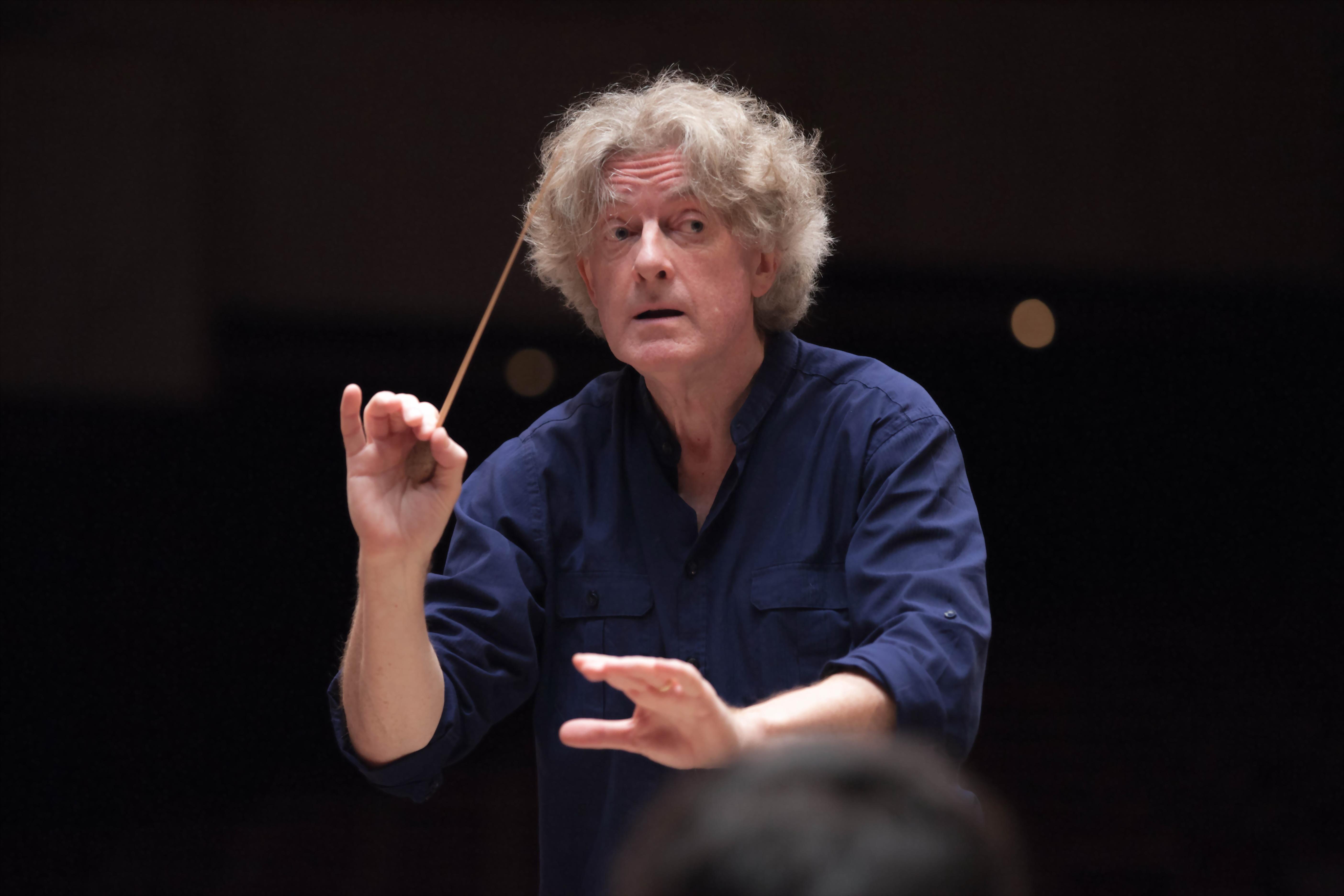
To see: Clerici conducts Beethoven’s Triple, Aug 1, 7:30pm, Dunedin Town Hall
Share article:
Other News & Reviews



Stay Tuned.
Keep current about all things DSO.


2026 Dunedin Symphony Orchestra
(Registered as Dunedin Civic Orchestra Incorporated. Registered Charity CC34031.
Address
PO Box 5571
Dunedin 9054
New Zealand
Hanover Hall
65 Hanover Street
Dunedin 9016
New Zealand








Address
PO Box 5571
Dunedin 9054
New Zealand
Hanover Hall
65 Hanover Street
Dunedin 9016
New Zealand
Connect


2026 Dunedin Symphony Orchestra
(Registered as Dunedin Civic Orchestra Incorporated. Registered Charity CC34031.