Review - 18 May 2026
Choirs / Orchestras combine for captivating concert
Review - The Star, Saturday 16 May 2026 - Mahler's 'Resurrection' - Dunedin Symphony Orchestra / New Zealand Symphony Orchestra / City Choir Dunedin, guest singers, guest soloists. Friday, May 15, Dunedin Town Hall. Review by Sam Henderson

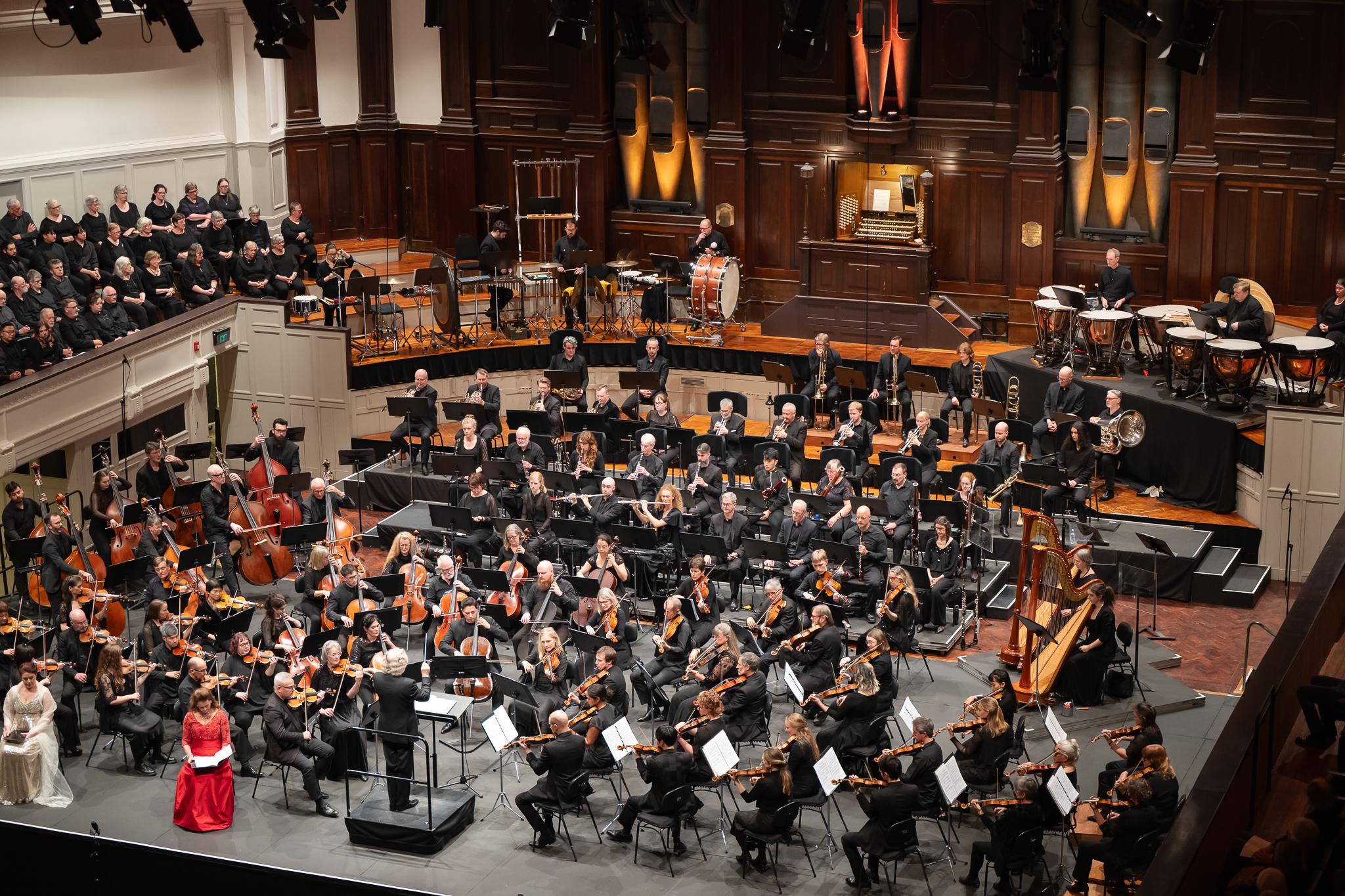
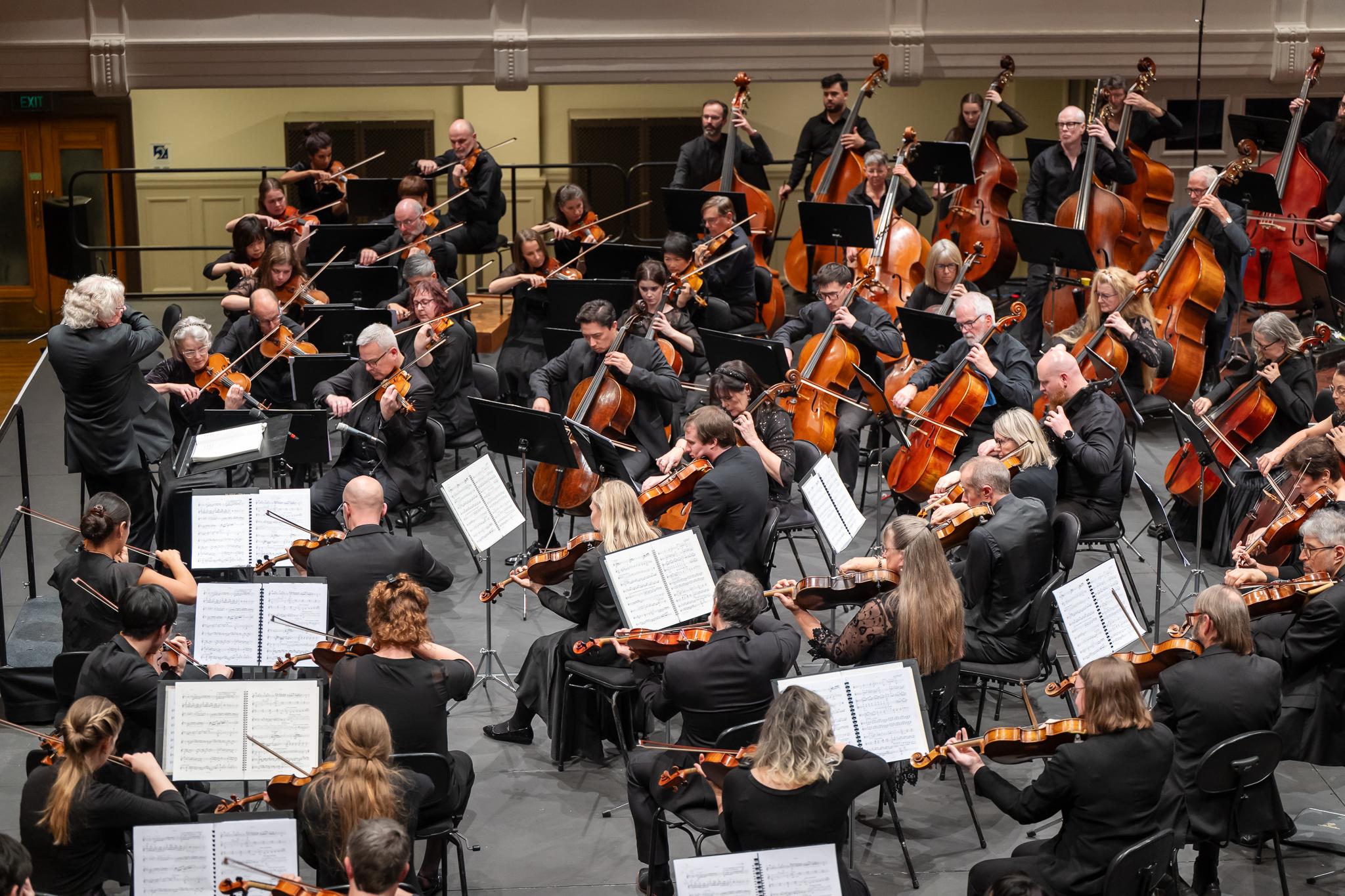
Under the precise baton of conductor James Judd, about 120 instrumentalists from the Dunedin Symphony and New Zealand Symphony orchestras combined with a chorus of about 120 voices to perform Gustav Mahler's Symphony No 2 "Resurrection".
Guided by musical director David Burchell, the City Choir Dunedin was bolstered by guest singers from a wide range of local vocal groups.
Soprano Anna Leese and mezzo-soprano Deborah Humble featured as the evening's stellar soloists.
The performance began with Fanfare Kotahitanga, a specially commissioned piece by local composer Anthony Ritchie. He conceived the central theme overnight while undergoing chemotherapy, constructing a long arching pentatonic melody that radiates hope and determination. The piece carries a fresh, purposeful air that to me evoked the sound of the New Zealand bush, where disparate noises blend into an atmosphere of restless energy
The programme then shifted to Mahler's epic symphony. It was written between 1888 and 1894 and first performed in 1895. The first movement had its origins in a symphonic poem called Totenfeier or ‘Funeral rites’. Inspiration to develop it as a symphony struck Mahler in 1894 at the funeral of conductor Hans von Bülow, where he heard a setting of Friedrich Gottlieb Klopstock's poem Die Auferstehung.
Although I am not an expert on classical music, that background was entirely unnecessary to appreciate an evening that transformed academic purity into raw emotion. The music cuts directly to the heart of human endeavour, artistry and versatility.
Judd commanded the vast array of singers and musicians to deliver an extraordinary range of dynamics sweeping across the entire audio spectrum. From the lightest instrumental touches that barely register a sound to an overwhelming, crushing force, the symphony demands terrifying precision, which the combined ensemble executed perfectly.
The vocalists were equally spellbinding, particularly in the fourth movement, Urlicht, where Humble's rich mezzo-soprano voice reverberated powerfully across the auditorium.
An arresting spatial effect was achieved during the fifth movement, Im Tempo des Scherzos, with the deployment of a Fernorchester, a small extra orchestra positioned outside the main concert hall. The faint, offstage echoes of trumpets and percussion created the distinct illusion that music pierced the very walls of the Dunedin Town Hall.
Mahler’s score drags the outside world into the performance space, suggesting the sheer volume of emotion cannot be contained within the building, like tears spilling uncontrollably from a face.
The final section began with the massed singers and Leese delivering "Aufersteh'n, ja aufersteh'n wirst du" (Rise again, yes, rise again) in a hushed, purely a cappella arrangement. This delicate opening deliberately paves the way for a spiralling wall of sound, integrating the full might of the instrumentalists, combined vocal groups and the venue's massive "Norma" organ.
As the final triumphant chords crashed to silence, the audience leapt to its feet in a fiercely enthusiastic standing ovation.
Share article:
Other News & Reviews




Stay Tuned.
Keep current about all things DSO.


2026 Dunedin Symphony Orchestra
(Registered as Dunedin Civic Orchestra Incorporated. Registered Charity CC34031.
Address
PO Box 5571
Dunedin 9054
New Zealand
Hanover Hall
65 Hanover Street
Dunedin 9016
New Zealand








Address
PO Box 5571
Dunedin 9054
New Zealand
Hanover Hall
65 Hanover Street
Dunedin 9016
New Zealand
Connect


2026 Dunedin Symphony Orchestra
(Registered as Dunedin Civic Orchestra Incorporated. Registered Charity CC34031.